
Article

Canada's Q3 deal market, plus how to weigh financing growth against a sale.
Tariffs have forced many Canadian business owners to focus on protecting margins, customers and cash flow. But defence should not be the entire strategy. An equally important question is where the next stage of growth will come from and who is best positioned to pursue it.
Canada already has trade agreements providing access to markets beyond the United States. On September 1, the United Kingdom began applying the Comprehensive and Progressive Agreement for Trans-Pacific Partnership (CPTPP) with Canada, alongside the existing Canada–UK trade agreement. This is not an automatic source of new customers, but it creates another route to assess.
This does not mean abandoning profitable U.S. business. Diversification should begin with evidence of demand and a realistic assessment of shipping, regulation, currency exposure, customer support and working capital. An agreement may improve trading terms; it cannot, by itself, create an attractive business case.
For an established private company, the opportunity may lie in expanding distribution, adding capacity or acquiring a complementary business. Each path has a different capital requirement, and may lead to a different ownership decision.
Building a presence in a new market offers control, but requires time, local knowledge and investment before results are assured. A distributor or joint-venture partner may provide faster access, although the owner gives up some control over customer relationships and economics.
An acquisition may be the fastest route to scale. Buying an established distributor, competitor or complementary operator can add customers, capabilities and local expertise immediately. It also introduces purchase-price, integration and financing risks. The central test is whether the expected cash flow justifies the capital committed.
Owners sometimes assume that a major growth initiative requires selling equity. Not necessarily. Senior or subordinated debt may fund an acquisition or expansion while allowing existing shareholders to retain ownership. The right structure depends on sustainable cash flow, current leverage, available security and the lender’s assessment of risk.
The key is to model the complete funding requirement and not just the acquisition price or equipment cost. Include working capital, integration spending and contingency, then test debt service under a slower-growth scenario. The objective is sufficient financing with room to operate, not the maximum amount a lender might advance.
The same opportunity may be more valuable in another owner’s hands. A strategic buyer with established international distribution, complementary products or deeper capital resources may be positioned to develop the business more quickly than its founder can independently.
That makes a sale worth evaluating even when the company is performing well. The comparison should consider realistic sale proceeds, the owner’s willingness to assume additional debt and risk, the time required to execute the growth plan, and personal objectives. A buyer’s potential synergies do not automatically translate into a premium for the seller.
The decision is not simply whether to expand or exit. It is whether to build, partner, acquire, finance or sell and how each choice affects long-term value. Before committing to the next stage, establish what the business can prudently borrow and what a credible buyer might pay. Those two numbers can materially change the decision.
For more insights and advice on growing or selling your business.
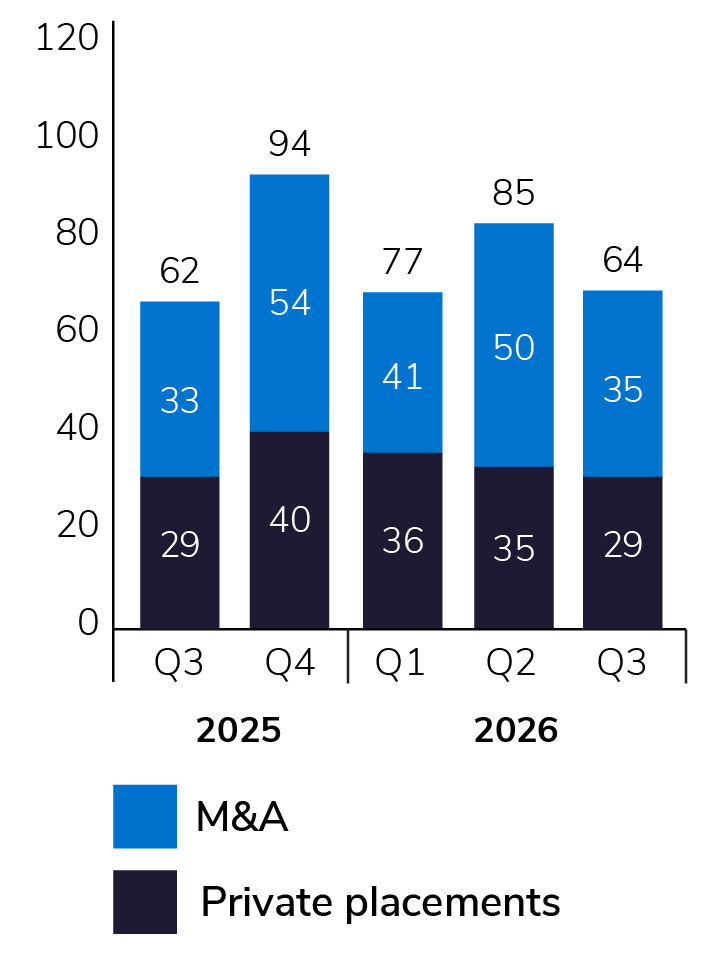
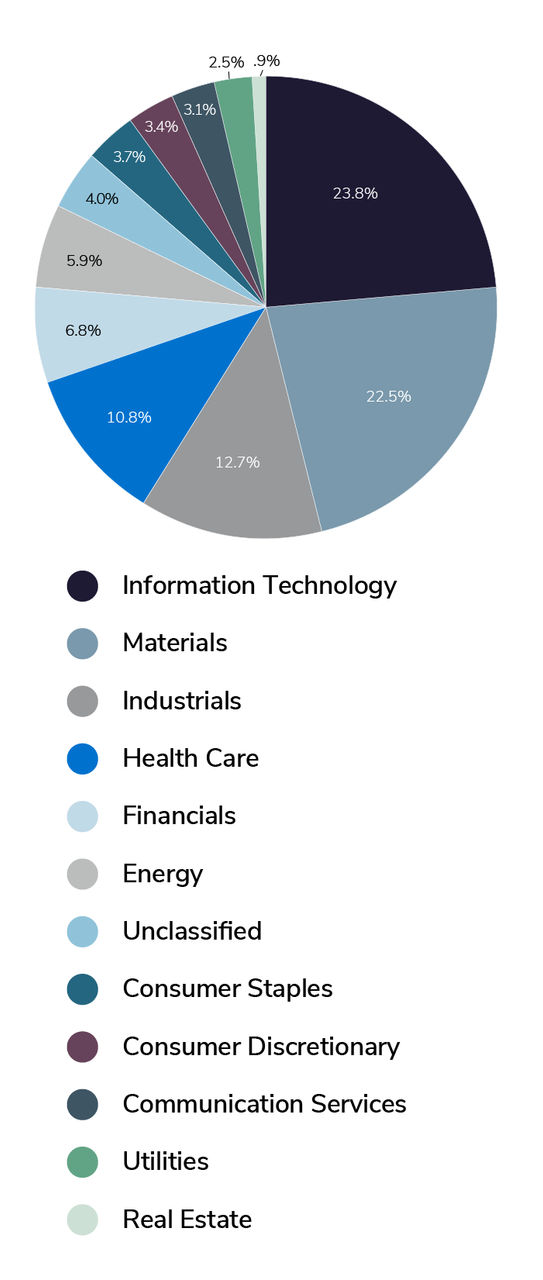
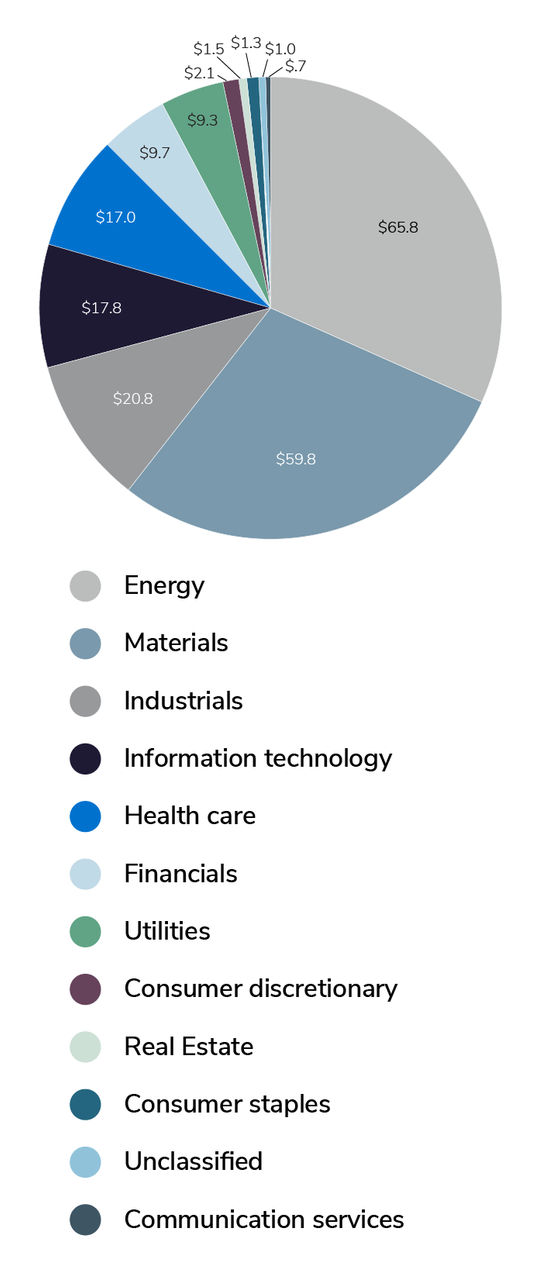
Over the trailing 12 months, IT and materials dominated Canadian deal volume — 77 and 73 transactions respectively, together claiming nearly half of all activity. In contrast, deal value tells a different story. Energy generated roughly $66 billion (CAD), much of which reflects a handful of large transactions, the five largest account for nearly 90%, while materials contributed nearly $60 billion. Industrials (41 deals) and health care (35) rounded out the busy end of the quarter.
The lesson for owners: your sector’s deal count doesn’t necessarily predict its dollar weight. Sector totals are driven by a few large transactions and say little about any one company’s value.
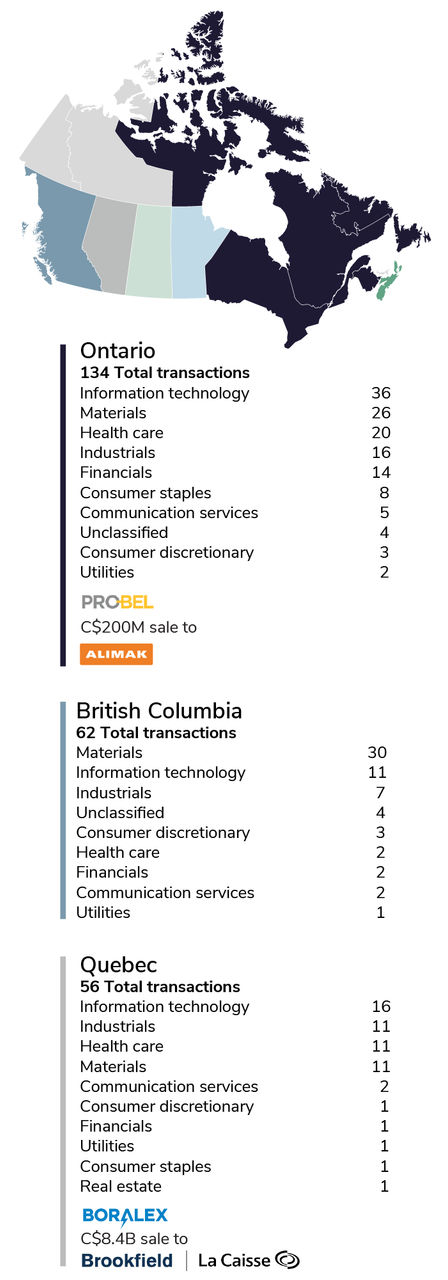
Ontario remains Canada’s deal engine, accounting for 134 of 324 trailing 12-month transactions — 41% of all activity. BC (62), Québec (56) and Alberta (47) form the next tier, and together the top four provinces were home to 92% of deals.
Three Q3 transactions stand out. Alimak Group acquired Pro-Bel Group, a privately owned Ontario business, at an enterprise value of $200 million, including deferred consideration. Ecolab acquired Alberta’s CoolIT Systems for $6.5 billion and Brookfield and La Caisse completed their take-private of Québec’s Boralex.
Strategic buyers, domestic and foreign, remained active acquirers of Canadian businesses.
IG Private Company Advisory provides strategic and transaction advisory services for transaction sizes of $10 million and up. Discover how we can help unlock your company's potential.
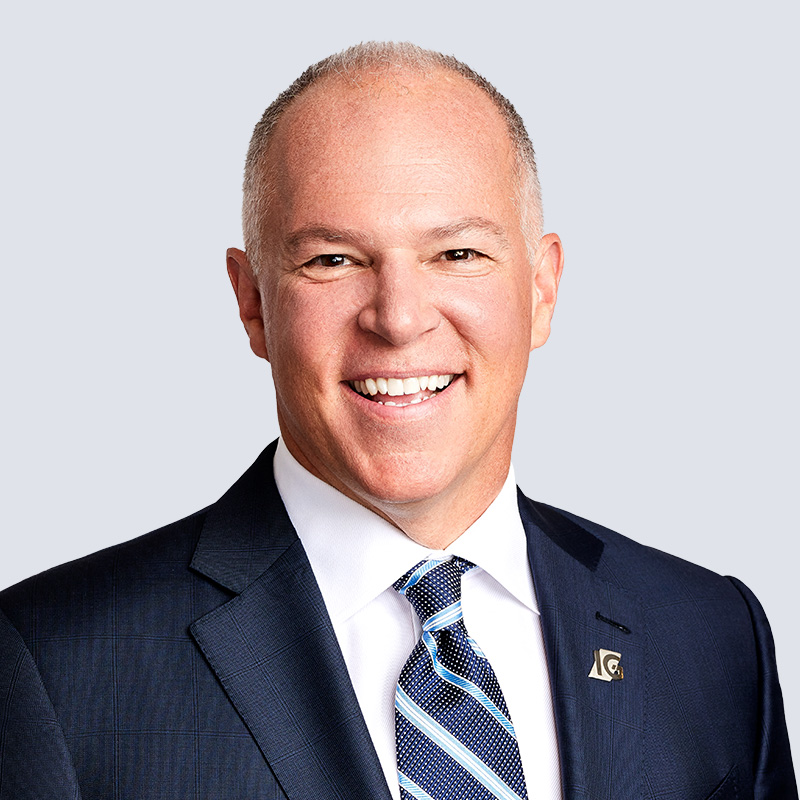
David Turnbull — Head of IG Private Company Advisory — leads a team with decades of experience across many industries. His team has access to an extensive global network of strategic and financial business buyers and capital providers. This helps business owners navigate growth, capital decisions and transactions with institutional-quality M&A, corporate finance and strategic advice.
Data source – Capital IQ
Trademarks, including IG Wealth Management and IG Private Wealth Management, are owned by IGM Financial Inc. and licensed to subsidiary corporations. This commentary is published by IG Wealth Management. It represents the views of our Portfolio Managers, and is provided as a general source of information. It is not intended to provide investment advice or as an endorsement of any investment. Some of the securities mentioned may be owned by IG Wealth Management or its mutual funds, or by portfolios managed by our external advisors. Every effort has been made to ensure that the material contained in the commentary is accurate at the time of publication, however, IG Wealth Management cannot guarantee the accuracy or the completeness of such material and accepts no responsibility for any loss arising from any use of or reliance on the information contained herein. Investment products and services are offered through IG Wealth Management Inc. (in Québec, a firm in financial planning), a member of the Canadian Investor Protection Fund. This commentary may contain forward-looking information which reflects our or third party current expectations or forecasts of future events. Forward-looking information is inherently subject to, among other things, risks, uncertainties and assumptions that could cause actual results to differ materially from those expressed herein. These risks uncertainties and assumptions include, without limitation, general economic, political and market factors, interest and foreign exchange rates, the volatility of equity and capital markets, business competition, technological change, changes in government regulations, changes in tax laws, unexpected judicial or regulatory proceedings and catastrophic events. Please consider these and other factors carefully and not place undue reliance on forward-looking information.

